What conversations are shaping the future of return migration governance?
How can we better measure what makes return migration effective and sustainable?
What conversations are shaping the future of return migration governance?
How can we better measure what makes return migration effective and sustainable?
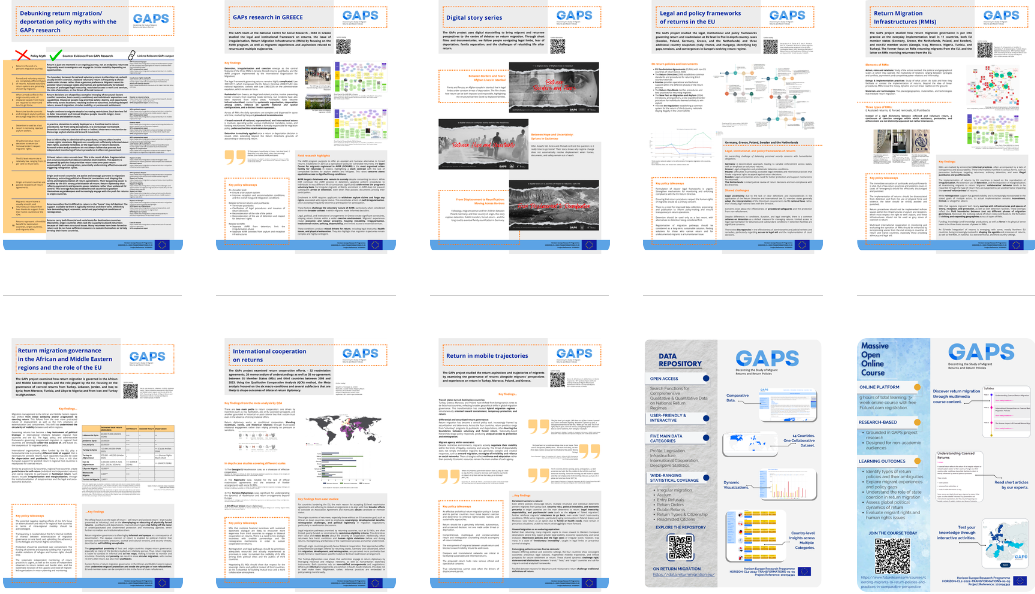
An inventory of promising return practices across 12 countries. It defines promising practices as those that actively promote migrants' rights, dignity, and agency while also contributing to effective and sustainable return governance. Eight recurring themes characterised these practices, including creating pathways out of precarious status, prioritising alternatives to detention, embedding multi-actor coordination, and delivering holistic and sustained reintegration support.
GAPS’ Working Paper Series ‘Decentring the Study of Migrant Returns and Readmission Policies in Europe and Beyond’ features recent research output by the team members of 17 partner institutions involved in the Horizon Europe GAPS project, and is open to all researchers working on similar topics.
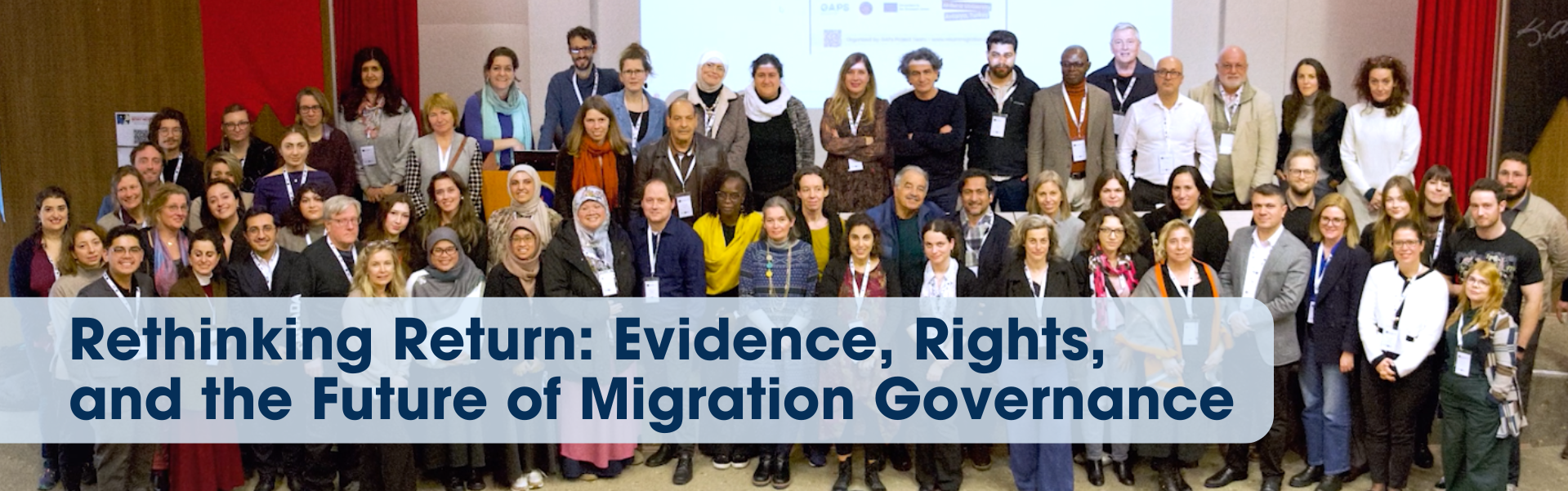
The GAPs Project Final Conference convened researchers and policymakers to explore emerging challenges, policy pathways, and the evolving landscape of return governance.
How can research on return migration help to bridge the gap between policy and lived experience? This final video summarises five key insights and reflections from the GAPs research project (2023–2026) on return and reintegration. It highlights the complexities of return migration and sheds a light on the challenges faced by those navigating return processes, as well as the difficulties in making return policies and procedures more human-centered and fair.
GAPs Data Repository offers an overview of available qualitative and quantitative data on national return regimes. It is launched in 2024 as an output of the Horizon Europe project ‘GAPS: De-centring the Study of Migrant Returns and Readmission Policies in Europe and Beyond’ (101094341).
Designed to be open access and user-friendly, the Data Repository collects all relevant quantitative, qualitative, and visual data into five main categories, ensuring a unified and organized presentation for those interested in return related data: Profile, Legislation, Infrastructure, International Cooperation, Descriptive Statistics.
Explore insights, debates, and evidence at the intersection of migration policy and lived experience through the GAPs Blog. This page brings together contributions from researchers across multiple countries, offering timely analysis on return migration, readmission policies, and reintegration challenges. Drawing on interdisciplinary research from the Horizon Europe GAPs project, the blog highlights both policy frameworks and on-the-ground realities—revealing the complex factors shaping migrants’ decisions, the gaps between policy and practice, and the human dimensions often overlooked in migration governance.
GAPs works closely with six other Horizon Europe projects working on return migration and conditions of irregular migrants.
During its lifetime, GAPs will engage in several joint activities with these projects.